
Dependable fulfilment
Structured pick, pack, and carrier handoff workflows help protect cut-offs, keep orders moving, and support a more dependable delivery promise.

A specialist 3PL fulfilment operation built around dispatch accuracy, delivery performance, system discipline, and scalable execution for growing brands.
Trusted by Industry Leaders












The clearest gains come from four areas: dependable dispatch, tighter stock control, clearer tracking visibility, and scalable day-to-day execution.

Structured pick, pack, and carrier handoff workflows help protect cut-offs, keep orders moving, and support a more dependable delivery promise.
Tighter inventory handling and operational discipline reduce avoidable errors, improve visibility, and create a cleaner order flow for optimised fulfilment and inventory management.
Better co-ordination from dispatch through to delivery supports clearer updates, stronger customer confidence, and fewer reactive support chases.
Tracking
Shared infrastructure, fulfilment discipline, and peak-readiness give brands more control without the daily operational firefighting.
We plug directly into your existing tech stack. Whether you run on Shopify, NetSuite, or a custom build, our systems shake hands with yours instantly.


Active Connectors
Clean receiving, reliable order release, controlled dispatch, and protected delivery performance are what keep fulfilment strong as volume builds.
Interactive flow map
Select a step to view the corresponding flow details.
Stock arrives at our warehouse.
Inbound inventory is booked in with receiving checks to establish a clean operational baseline.
Included in this step
Step 01Inbound receiving
Initial stock checks
System booking
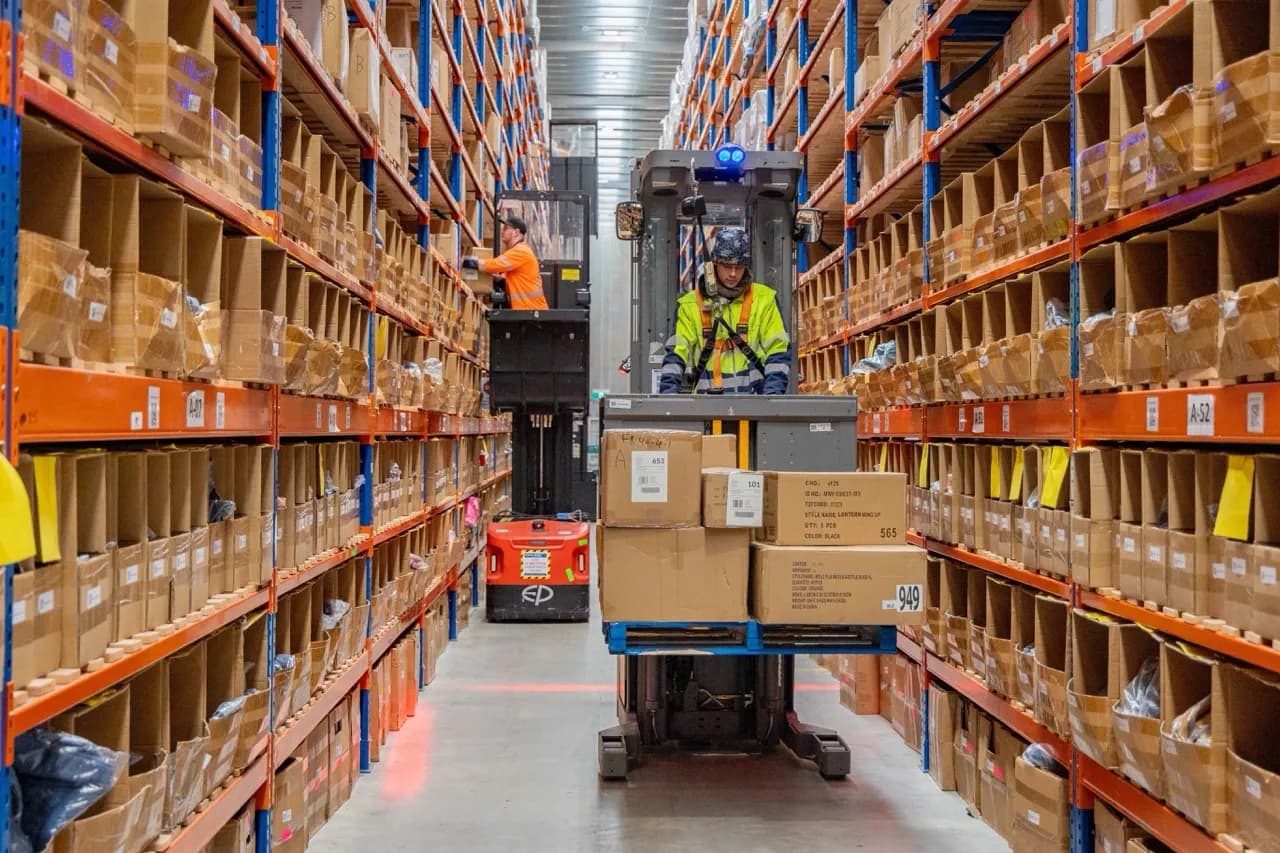
You get immediate inventory visibility, cleaner stock control from day one, and fewer downstream handling errors.
These are the underlying numbers behind the service promise: capacity, coverage, systems discipline, and the operational depth required to keep dispatch standards consistent.
Annual Orders
Inventory Accuracy
NPS
Warehousing Capacity
Fulfilment Centres
System Integrations
NZ Owned
Established
Industry Experience
Dedicated Team
You are not just buying warehouse space. You are choosing operational execution, dispatch accuracy, systems discipline, and delivery performance you can trust under pressure.
Fulfilment as the primary operating focus
Not a side division competing with other logistics priorities
Online Distribution operates with a primary focus on inventory management, fulfilment excellence, and delivery performance, so the operation is built around order flow quality.
Fulfilment is often one offer among fleets, freight, containers, or other divisions, which can dilute attention on dispatch quality and day-to-day execution.
Carrier strategy and delivery agility
Service performance without being boxed into a single transport model
Carrier selection is managed for speed, reliability, and cost efficiency, giving clients more flexible delivery performance as order profiles change.
Transport choices can be constrained by internal fleet bias or rigid delivery models that prioritise their network over your service fit.
Dispatch accuracy and operational discipline
The warehouse controls that protect customer experience
Structured receiving, picking, packing, and dispatch controls are designed to reduce errors, protect DIFOT, and keep customer delivery experience consistent.
Operational control can become inconsistent when fulfilment is not treated as the core service discipline, especially as complexity or volume increases.
Integrated visibility from order to delivery
System flow, tracking updates, and exception awareness
Order transmission, tracking visibility, and reporting are treated as operational infrastructure, not an afterthought layered on later.
Partial integrations and weaker reporting leave more manual follow-up, less confidence in status visibility, and slower response when issues arise.
Peak-readiness under growth pressure
Scaling without letting service quality slip
Shared infrastructure, dispatch discipline, and exceptional peak-period performance help protect service when campaigns, seasonality, or growth spikes hit.
Process strain often surfaces quickly during volume swings, leading to slower dispatch, service inconsistency, and reactive firefighting.
This is the reassurance layer for end-of-funnel buyers: fulfilment focus, dispatch discipline, carrier flexibility, and visibility that make the operation feel under control from the first order onward.
Five fulfilment control signals buyers look for
Start with the four areas that shape the commercial result most: pricing logic, location fit, integration capability, and whether delivery performance will genuinely improve.
We scope rate logic around your order profile and service complexity so your cost-per-order is predictable, transparent, and aligned to growth.
Coverage planning is built around your customer footprint and delivery commitments, not generic network assumptions.
Integration is treated as operational infrastructure: stable data flow, automated order transmission, and visibility from inventory to dispatch.
We optimise dispatch rhythm and carrier selection around service performance, so timeframes stay reliable as order volume shifts.
The reporting we provide is centred on DIFOT, exception visibility, customer-service response times, inventory accuracy, damages in transit, and inbound/outbound performance. Clients can use that reporting to calculate commercial measures such as cost per order in their own environment.
DIFOT
97.8%
92.1%
6.2%
14-day trend comparison
Current vs previous
DIFOT remains one of the clearest indicators of whether orders are leaving on time and in full against the service promise.
+6.2%Error / Exception Reporting
Before
61.0%
Issues surfaced late
After
94.0%
Exceptions surfaced early
Exception reporting gives clients visibility over errors, operational drift, and the actions taken to resolve them before they become bigger service problems.
+54.1%Customer Service Response Times
Response-time reporting shows how quickly queries and service issues are acknowledged and progressed by the client service team.
-67.7%Inventory Accuracy
99.6%
96.4%
+3.3%
Inventory accuracy reflects whether receiving, storage, picking, and stock movements are being controlled tightly enough to trust the data.
+3.3%Inbound / Outbound Performance
Inbound and outbound performance reporting shows how reliably goods are received, processed, and released through the warehouse operation.
+15.7%Damages in Transit
Better handling control
Before: 2.8%
Transit-damage reporting helps identify whether packaging standards, warehouse handling, or carrier performance are creating avoidable loss.
-60.7%The onboarding question is simple: can you move without disrupting orders, stock accuracy, or customer delivery? This transition plan is built to protect trading continuity from day one.
Each onboarding plan is staged around your systems, stock profile, and service scope so the transition is controlled before go-live.
Onboarding timeline board
Stage milestones
Stage 1
Stage 2
Stage 3
Stage 4
Discovery & operational mapping
We map your order profile, SKU behavior, cut-off windows, and service constraints.
Integration & testing
Systems are connected and validated end-to-end to ensure order data flows cleanly.
Inventory transfer
Stock migration into controlled warehouse flow with reconciliation checkpoints.
Go-live
Dispatch starts with live reporting and operational oversight from day one.
Estimate where operational friction is costing you and what tighter process control can recover across service, speed, and margin.
Mia Thompson· Client Success Lead
Hi, I’m Mia Thompson from Online Distribution. I can help you assess fulfilment operations quickly and clearly. Pick a question below and I’ll give you a practical answer.
With strategically located fulfilment centres across Auckland and Christchurch, we run a national 3PL network that puts inventory closer to customers and keeps service levels predictable.
Head Office
National Support Office
306 Port Hills Road, Hillsborough, Christchurch
These answers focus on the questions serious fulfilment buyers usually ask before moving away from in-house operations or a less-focused provider.
Prospects usually want clarity on cost per order, delivery charges, and the parts billed separately. Service scope, order profile, and carrier requirements are defined up front so pricing is transparent and operationally realistic.

A scoped plan in one call.
We align volumes, cut-offs, and integrations, then define the controls that protect service at peak.